Italian Porcelain Cachepot Coral Gold Paw Feet Laurel Planter Italy Vintage
Italian Porcelain Cachepot Coral Gold Paw Feet Laurel Planter Italy Vintage
Couldn't load pickup availability
ITALIAN PORCELAIN CACHEPOT WITH GILT PAW FEET AND LAUREL BANDS, CORAL GROUND
Era: Mid-20th Century (attributed)
Maker: Italian porcelain workshops — stamped ITALY, no maker name
Style: Neoclassical Empire style, gilt laurel and lion paw feet
OVERVIEW:
A small Italian porcelain cachepot with real presence for its size. The flared cup is finished in a speckled coral pink ground, banded top and bottom in white with gold laurel leaves, and it stands on four gilt lion paw feet set on a square plinth — the full Neoclassical uniform in four inches. The inside rim carries the same gold laurel, so it looks finished from above with a plant in it or standing empty. Made to hold a small orchid, an African violet, or nothing at all on a vanity or desk. The base is stamped ITALY.
SPECIFICATIONS:
• Dimensions: 4 x 4 x 4 inches
• Material: Porcelain with gilt decoration
• Ground: Speckled coral pink with white and gold laurel bands
• Feet: Four gilt lion paw feet on a square plinth base
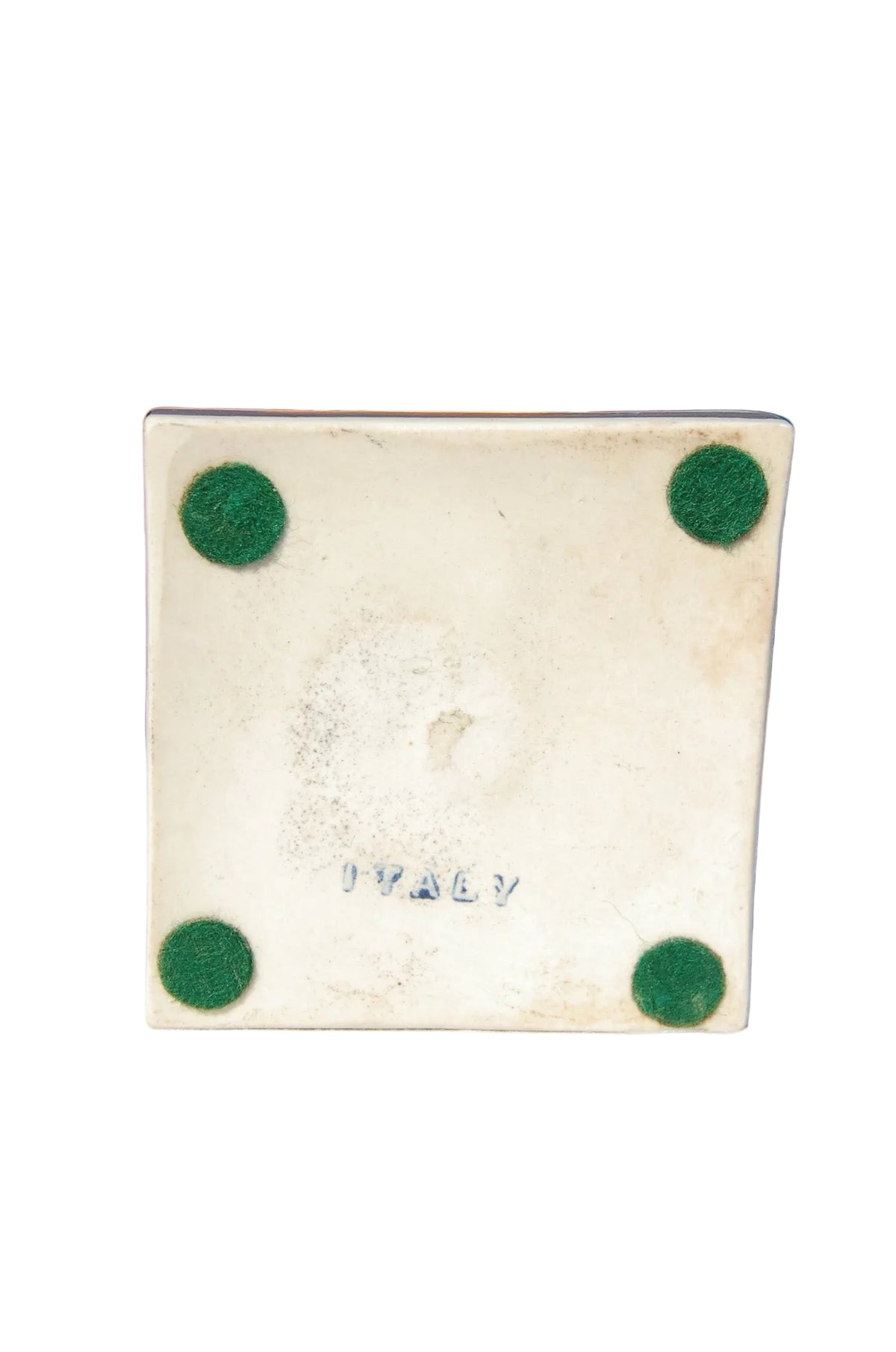
• Mark: ITALY stamped in blue on the base
• Origin: Italy
CONDITION:
Very Good Vintage Condition — One Small Rim Chip
• One small chip on the gilt rim band, exposing the white porcelain — see the close-up photo
• Light wear to the gilding on the paw feet and plinth edge, as photographed
• No cracks, crazing or other chips seen; interior clean
• Felt pads on the base are later additions
HISTORICAL SIGNIFICANCE:
The cachepot — French for "hide-the-pot" — exists so an ugly nursery pot never has to show. Italy's porcelain workshops supplied the postwar American and European taste for Neoclassical revival decor, borrowing the Empire style's vocabulary of laurel wreaths and lion paw feet from Napoleonic France. The paw foot is older still, copied from ancient Roman furniture, and the laurel has signified victory and honor since antiquity. Small footed cachepots like this one were the finishing touch on mid-century vanities and plant stands.
Share